When Photography Went Quiet
For a while, my camera sat on my desk.
I knew it was there. I walked past it every day. I could see it sitting there, ready to be picked up, but I just couldn't bring myself to do it.
After losing my mum, something in me changed. One of the things I found hardest to understand was that the desire to create simply disappeared.
Photography had always been such a big part of my life. It wasn't just my job. It was something I had built so much of my life around. It had taken me to places I could once only have dreamed of, introduced me to incredible people and given me a reason to spend countless hours outside, watching the landscape change.
But suddenly, none of that seemed particularly important.
I didn't have any ideas.
I didn't have the desire to go looking for photographs.
I didn't even really want to pick up the camera.
For someone who has spent so much of his life photographing landscapes, that felt very strange.
When the creativity disappears
I've always been drawn to the fleeting side of landscape photography.
I'm fascinated by those moments when the light changes and suddenly transforms somewhere familiar. A break in the cloud. A shaft of sunlight crossing a mountainside. The last light catching a distant ridge. Those moments can last seconds, and they're often the reason I go out with a camera in the first place.
But during this period, I wasn't looking for any of them.
I wasn't checking the weather forecast and thinking about what might happen. I wasn't studying maps or thinking about compositions. I wasn't thinking about lenses.
I wasn't thinking about photography at all.
The creativity had simply gone.
Eventually, though, I reached a point where I looked at the camera sitting on my desk and thought, right, I need to do something.
There wasn't some great revelation behind that thought.
I didn't suddenly feel inspired. I just knew I couldn't sit there doing nothing forever.
I also had workshop and one-to-one days that had already been arranged, so there were commitments I needed to honour. People had booked time with me, and I needed to turn up.
So I picked up the camera and went back outside.
In some ways, that was harder than I expected.
Going through the motions
The knowledge was still there.
I could still teach.
I could still talk about composition, light, exposure, filters and lenses. I could look at a scene with a client and explain what I was seeing and why I might approach it in a particular way.
None of that had disappeared.
But when it came to making my own photographs, something was missing.
I was going through the motions.
I was doing what I knew how to do, but I wasn't really feeling it.
There's a difference between making a photograph because you know how to make one and making a photograph because something in front of you has genuinely caught your attention.
I was missing that second part.
I think that's something people sometimes misunderstand about creativity. We tend to talk about it as though it's something we can switch on whenever we need it. As though we can simply pick up a camera, head somewhere beautiful and expect inspiration to arrive.
But it doesn't always work like that.
Sometimes the desire just isn't there.
And I think the only thing you can really do is give yourself time and allow yourself to come back when you're ready.
For me, that first little shift happened at Bamburgh.
When the light changed
I was on one of my last one-to-one days and had been busy helping my client work out how to frame the scene.
We were at Bamburgh, a place that has a particular connection for me because of where I grew up. It wasn't some remote landscape that required a long journey or weeks of planning. It was somewhere familiar.
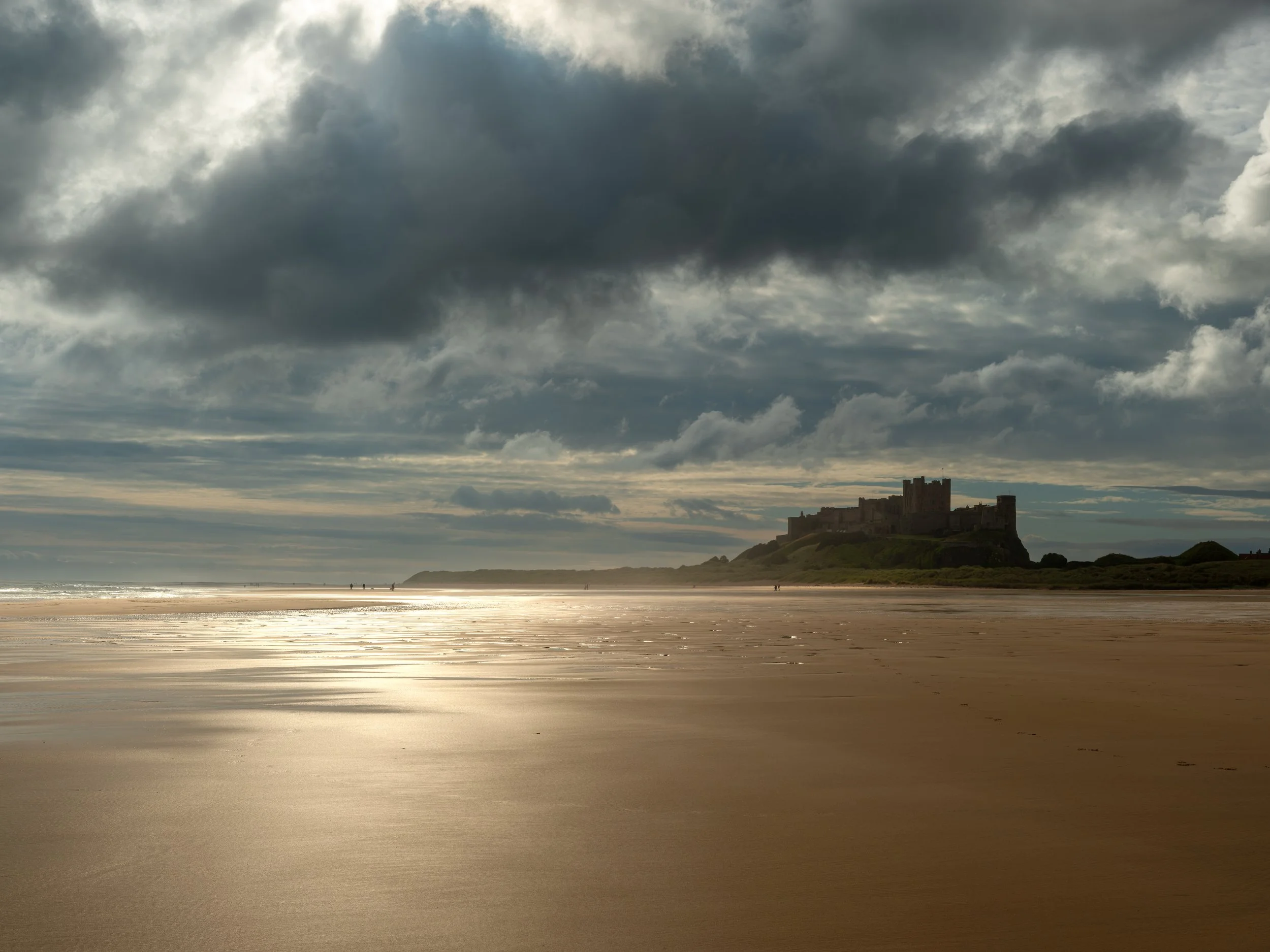
I'd been showing my client how I would approach the scene and, as I got to the end of that, I stepped back and let him experiment for himself.
That's when I noticed the light beginning to change.
The sand started to glow.
The sky became darker and more dramatic, and suddenly the whole scene had a completely different atmosphere.
Bamburgh Castle was sitting there between those glowing sands and the brooding sky, and something happened that I hadn't felt for a while.
I got excited.
It wasn't something I consciously decided to feel.
It just happened.
I had the Fujifilm X-T5 in my hands with the Sigma 17-40mm attached, and suddenly I wanted to work the scene.
I started moving around.
I started looking for compositions.
I started responding to the light.
For those few moments, I wasn't thinking about everything else.
I was simply photographing.
And I think that was the first time I realised the creative spark might not have disappeared completely.
It had just gone very quiet.
Finding my way back
What happened after Bamburgh wasn't dramatic.
There wasn't a sudden flood of creativity. I didn't suddenly start producing loads of photographs or feel like I was completely back to normal.
It was much more gradual than that.
What returned first wasn't necessarily the photography.
It was the desire to photograph.
That distinction is important to me.
I started wanting to go outside again.
I started looking at familiar places differently.
And I've found myself increasingly drawn towards locations that are close to home.
Places I've photographed countless times.
Places that I know well.
Places that I've perhaps photographed so many times that, in the past, I might have felt there was nothing new left to find.
Now I'm seeing them differently.
In some ways, I've started thinking of them as my playgrounds.
There is something reassuring about returning to somewhere you know.
You don't need to discover a new viewpoint. You don't need to worry about whether you're standing in the “right” place. You already know the landscape.
You know the paths.
You know how the light moves through it at different times of year.
But there is one thing you can never completely predict.
The light.
And that's enough reason to keep going back.
Hynham Bridge
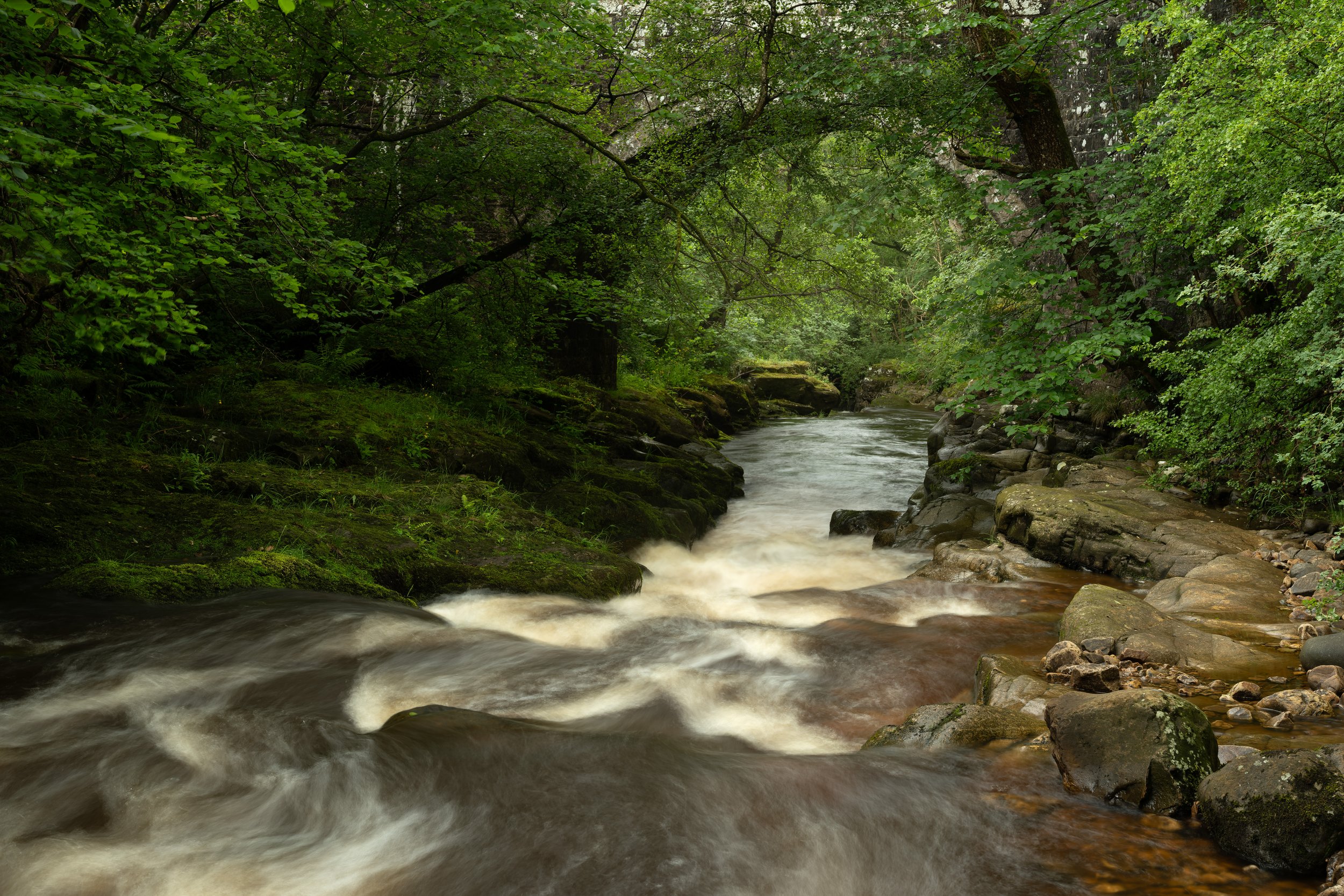
One of those places is Hynham Bridge, just up the road from me.
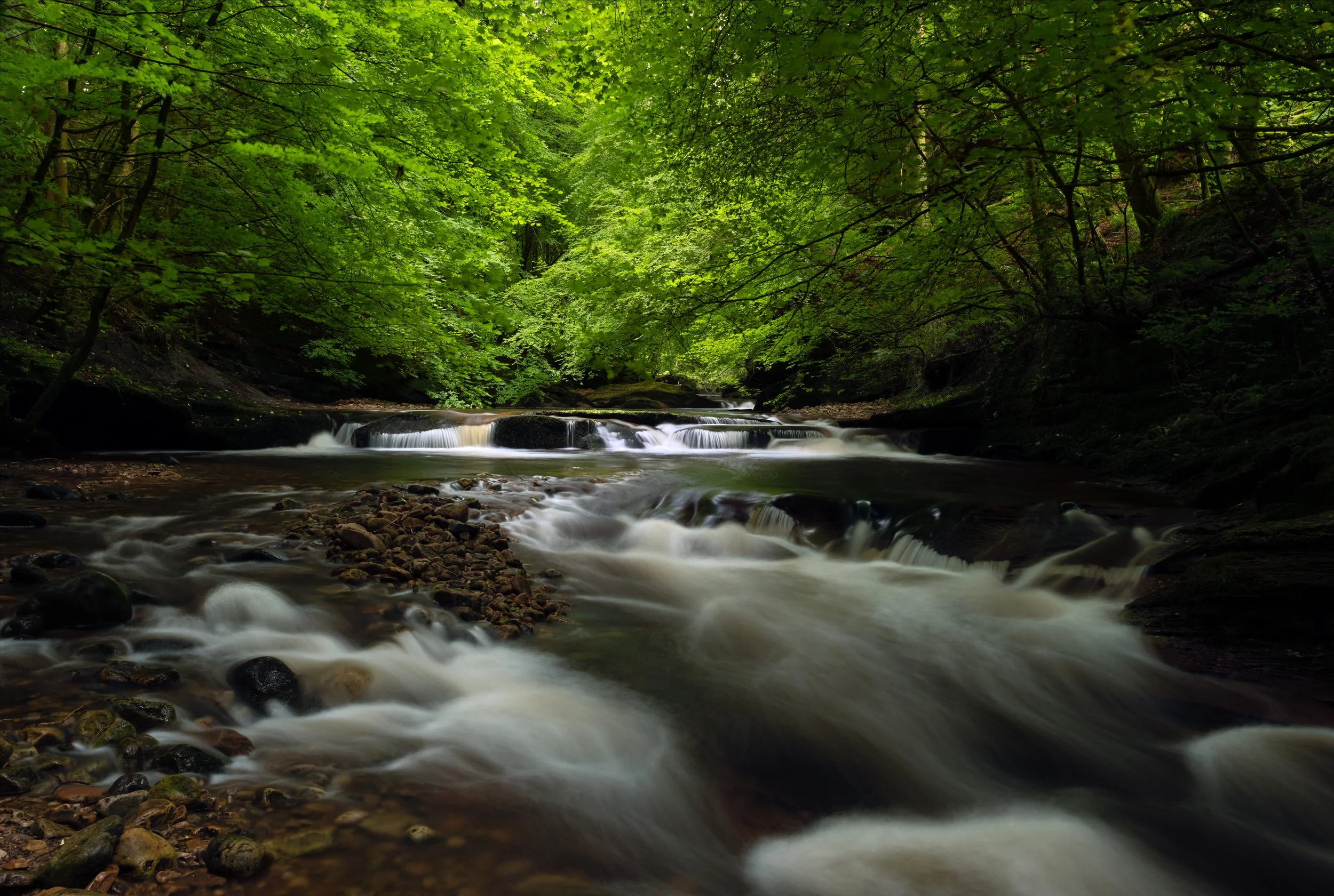
I was there on another one-to-one, working through the process of using a camera and filters to photograph the moving water as it flowed underneath the bridge.
It isn't an exotic location.
It isn't somewhere that people are likely to travel across the country specifically to photograph.
It's simply a local place.
But that's part of what I've started to appreciate.
I had the Sigma 17-40mm on the X-T5 because I wanted to fit the whole scene into the frame. The bridge, the surrounding landscape and the movement of the water all needed to work together.
I was back in a situation where I was helping someone else understand the process, but I was also enjoying the act of making a photograph myself.
There was something quite nice about that.
It wasn't about finding an extraordinary landscape.
It was about taking something familiar and paying attention to it.
The moving water.
The shape of the bridge.
The way the scene came together through the wider focal length.
It reminded me that I don't necessarily need some grand photographic adventure to feel connected to photography.
Sometimes it's right on my doorstep.
Looking for fleeting light
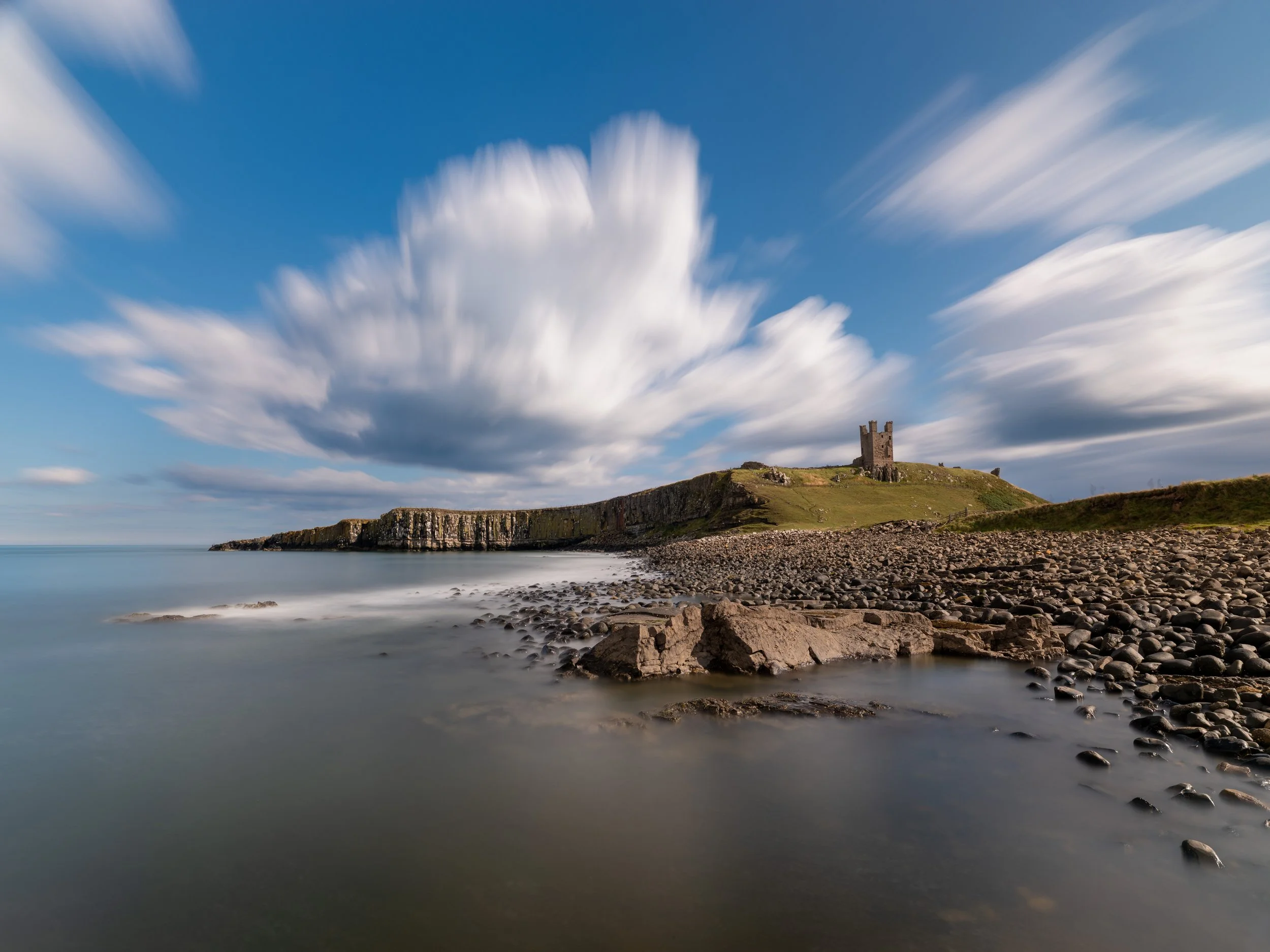
I've also been spending more time with the Sigma 100-400mm.
This has given me a completely different way of approaching those familiar landscapes.
On another outing close to home, I found myself looking across the fells and picking out small areas where fleeting light was appearing.
Rather than trying to photograph the entire landscape, I could use the 100-400mm to isolate those little moments.
A section of hillside.
A distant patch of light.
A small part of the landscape that might otherwise disappear into the wider scene.
It was exactly the sort of light I've always been drawn towards.
But there was something different about the way I was approaching it.
I wasn't obsessed with whether I was going to come home with an image.
In fact, that particular outing didn't even produce a photograph that I really liked.
And that's okay.
Because the value of going out wasn't necessarily the photograph I brought home.
It was the fact that I had wanted to go.
I had been motivated enough to pick up the camera, put the 100-400mm on it and head out looking for something.
That might not sound like much.
But after a period when I couldn't even bring myself to pick the camera up from my desk, it meant something.
The photograph didn't need to be a success for the day to be worthwhile.
The attempt itself mattered.
The camera has become less important
Something else has changed during this process.
I'm thinking about the camera much less.
That might sound like an odd thing for a photographer to say, particularly when I'm talking about the Fujifilm X-T5 and Sigma lenses, but it's probably one of the clearest changes I've noticed.
I'm not less interested in the technical side of photography.
I still want to understand my equipment. I still care about getting the exposure right. I still think about focal length, filters and composition.
But they're becoming less important than the experience.
I'm more interested in what I'm seeing than what the camera is doing.
I'm more interested in the landscape than the settings.
I'm more interested in the light than the equipment.
The camera has almost become an extension of the experience rather than the focus of it.
Perhaps that's something that comes with having spent so many years photographing.
You reach a point where the technical side becomes instinctive enough that you don't need to constantly think about it.
But I also think what I've experienced over the last few months has changed my priorities.
I'm much more conscious of being present.
If I'm standing somewhere watching a patch of light move across a hillside, I don't want to spend the whole time thinking about whether I'm using the perfect settings.
I want to experience it.
I want to watch it.
And if I can make a photograph that captures something of what I felt standing there, then that's a bonus.
Two lenses, two ways of seeing
The Sigma 17-40mm and 100-400mm have naturally become part of this period for me, but in very different ways.
The 17-40mm lets me step into a scene and bring the different elements together.
That was exactly what I needed at Bamburgh.
The castle wasn't enough on its own. The glowing sand wasn't enough on its own. The sky wasn't enough on its own.
It was the relationship between all three that made the scene work.
The wider view allowed me to include that relationship.
The 100-400mm, on the other hand, encourages me to look further.
It makes me notice things I might otherwise overlook.
When I'm standing in front of a familiar landscape, I can scan across it and search for those fleeting moments of light rather than automatically trying to capture the obvious view.
That has become a really enjoyable way of photographing my local landscapes.
And perhaps that's another reason I've enjoyed returning to these places.
I'm seeing more.
The landscape hasn't changed. I have.
The funny thing about returning to familiar locations is that the landscape itself hasn't changed.
The places are still there.
The fells are still there.
The rivers still flow.
The coast is still the coast.
But I think I've changed.
And because of that, I'm looking at those places differently.
Before, perhaps I would have been more focused on getting the photograph.
Now I'm increasingly interested in experiencing the place first.
Maybe that's partly because I've realised just how easy it is to miss the moment when you're thinking too much about the outcome.
Landscape photography can sometimes become quite goal-oriented.
You drive somewhere.
You hike somewhere.
You wait for the conditions.
You set up your tripod.
You make the photographs.
Then you go home.
And if the light doesn't work, it can feel as though you've failed.
I'm finding that I'm less bothered by that now.
If the light doesn't come, that's okay.
If the photograph doesn't work, that's okay.
If I spend an hour standing somewhere simply watching the landscape change, that's okay too.
The experience itself has value.
And sometimes, ironically, when you stop putting so much pressure on yourself to make the photograph, you become more receptive to the moments when something genuinely catches your eye.
I don't know where this goes next
I don't want to end this by pretending I've found some great answer.
I haven't.
I'm still finding my way back.
I don't really know what this new relationship with photography will become, and I don't think I'm ready to put a label on it yet.
What I do know is that something has changed.
The camera is no longer sitting untouched on my desk.
I'm taking it outside again.
I'm going back to my playgrounds.
I'm watching the light.
I'm experimenting.
I'm making photographs because I want to, rather than because I feel that I should.
And perhaps that's the biggest thing.
For a while, I thought the creative part of me had disappeared.
Maybe it hadn't.
Maybe it was simply buried under everything else that was happening.
The first sign that it was still there came at Bamburgh, when the sand started to glow and the sky turned dark and dramatic.
I picked up the X-T5.
I had the Sigma 17-40mm attached.
And for a few moments, I forgot about everything except the light in front of me.
That feeling is slowly coming back.
Not all at once.
Not in some dramatic transformation.
Just a little at a time.
A familiar place.
A changing sky.
A lens in my hands.
A reason to stop and look.
And that small desire to make a photograph.
I'm not sure where it will take me.
For once, I'm quite happy not to know.
I'm just glad I'm out there again, camera in hand, waiting to see what happens.