Landscape Photography in Assynt, Scotland
There are places you visit with a photograph already forming in your head.
And then there are places where you arrive with no real idea what you're going to photograph.
For me, Assynt felt much more like the second.
I'd wanted to visit Assynt for some time, but somehow never quite got round to it. That finally changed in January 2026, when I made my first trip north.
I couldn't have asked for much better conditions.
Snow was forecast while I was there and, by the time I left a few days later, it had disappeared again. For a landscape photographer, that short window of winter weather transformed the place.
The landscape was already incredible, but add snow, strong winds, huge skies and those brief breaks in the weather when the light suddenly appeared, and Assynt became something else entirely.
It was exactly the sort of landscape I find myself drawn towards.
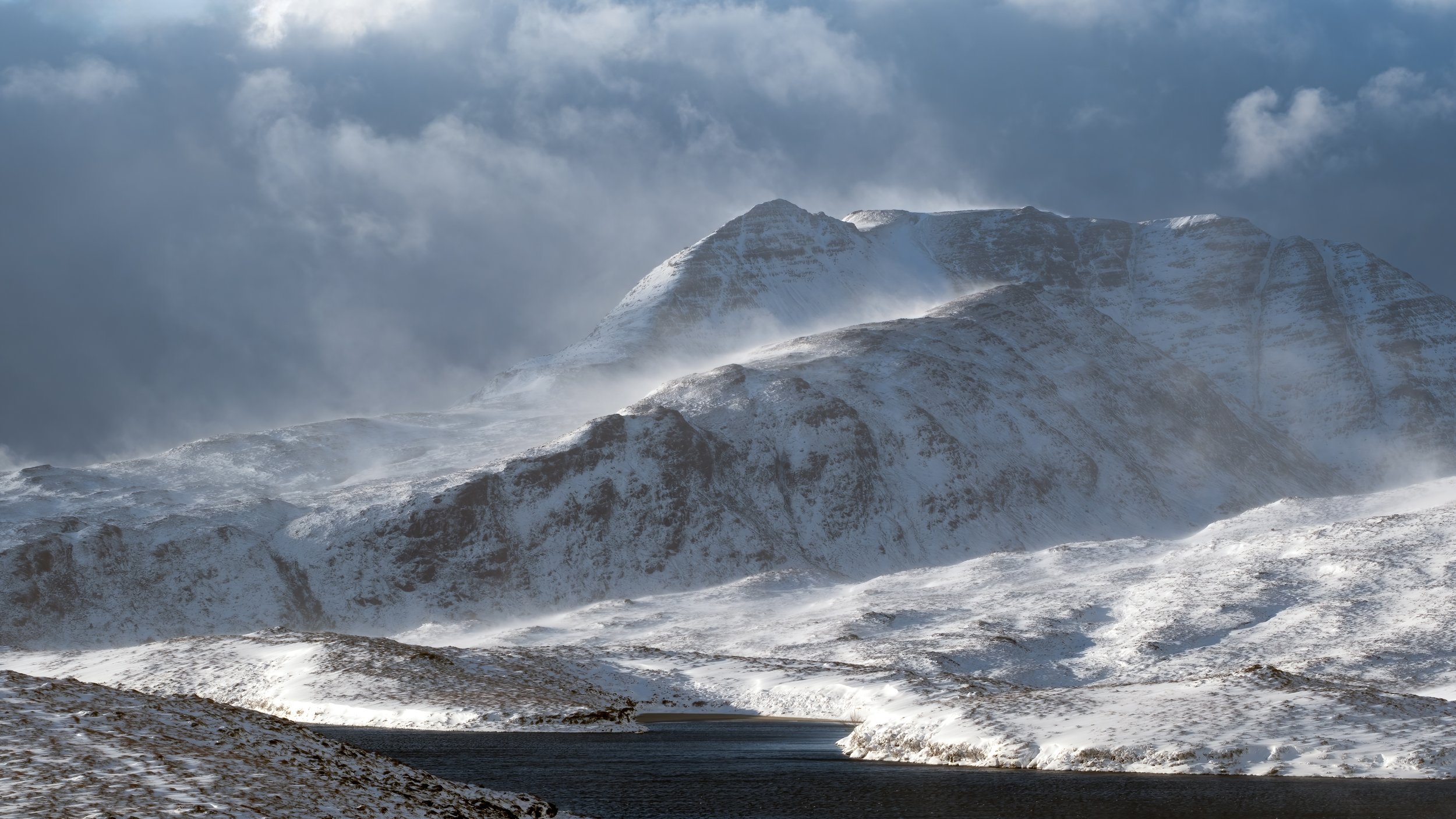
Snow being blown from the mountains during a brief break in the weather. For me, moments like this capture the dynamic nature of Assynt.
A First Visit to Assynt
I based myself near the coast, close to the Split Rock, staying in a little Airbnb that gave me a good base for exploring.
Most mornings started early if the conditions looked promising. I'd head out around sunrise, spend the day exploring and looking for compositions, and keep an eye on how the weather was developing.
That last part was important.
Rather than arriving somewhere and simply taking the photograph that I'd imagined before the trip, I was constantly looking at what was happening around me.
I'd find compositions that interested me, make a mental note of them and then move on.
If the light and weather changed later, I could return.
That way I wasn't trying to force the landscape to give me a photograph. I was waiting to see what it might offer.
And in Assynt, there was plenty happening.
The Scale and Wilderness of Assynt
One of the first things that struck me about Assynt was just how open it feels.
In many areas there seemed to be very little getting in the way of the landscape. There are roads, buildings and other signs of people, of course, but they often felt much less intrusive than in many other landscapes I've photographed.
The mountains felt huge.
The skies felt huge.
And there was a real sense of space.
That wilderness was one of the main reasons I'd wanted to come here in the first place. I'd spent plenty of time exploring other parts of Scotland, but this far north was somewhere I hadn't really experienced before.
Standing in it for the first time, I could see why I'd been drawn here.
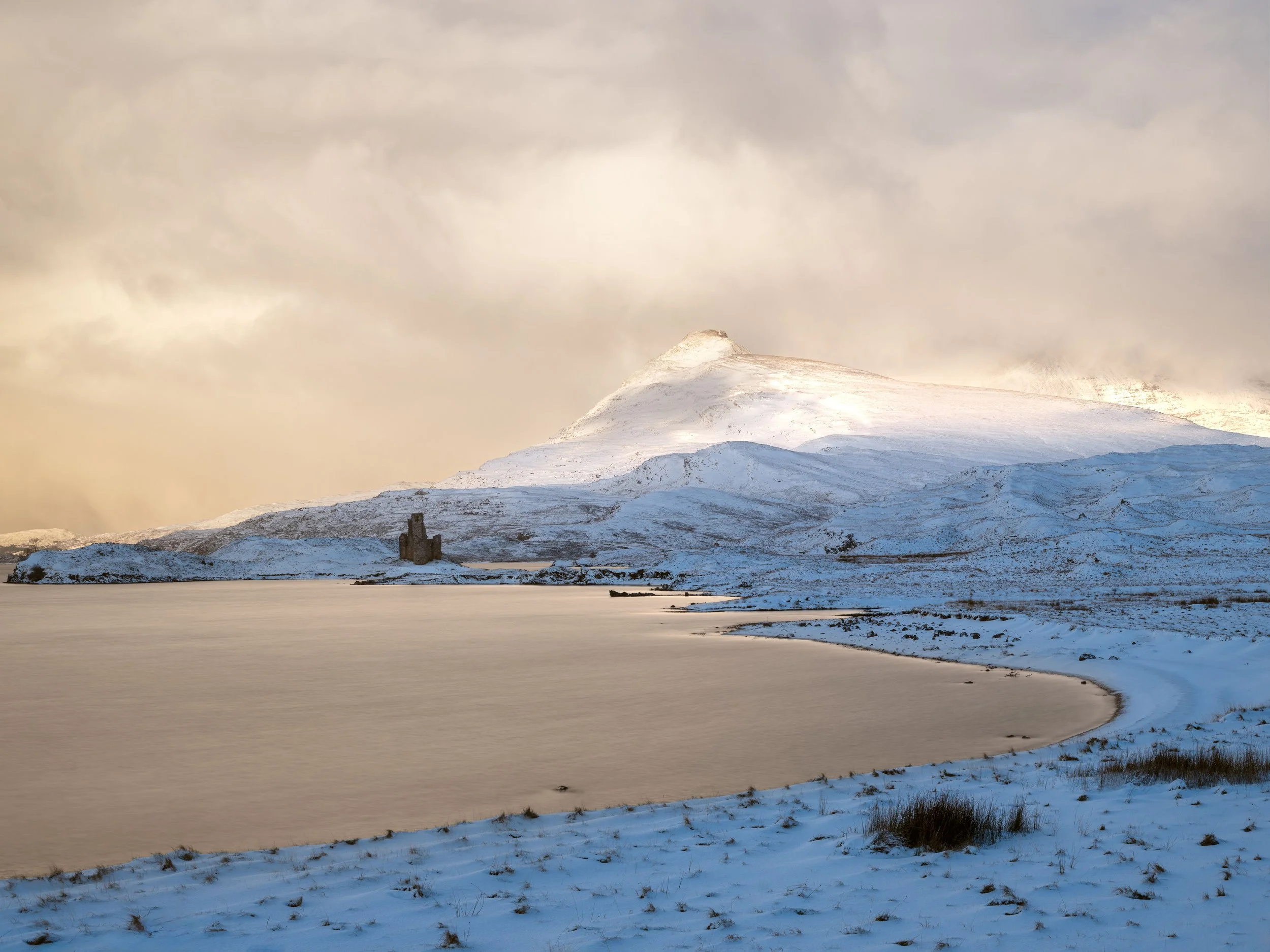
Ardvreck Castle sitting beneath the snow-covered mountains of Assynt. The sheer scale of the landscape is difficult to appreciate until you're standing in it.
When the Weather Becomes Part of the Photograph
The weather wasn't exactly gentle.
There were periods of incredibly strong winds and conditions that were close to blizzard-like. At times it was difficult to see much at all.
But that was also when things became interesting.
The weather created movement in the landscape.
Snow was being blown from the mountain tops. Clouds were racing across the sky. Visibility would disappear and then suddenly open up again.
And in between all of that chaos, there were brief breaks.
A patch of light.
A mountain appearing through the cloud.
A little more definition in the landscape.
Sometimes those moments lasted only seconds.
Those were the moments I was looking for.
I've always been drawn to fleeting light, but Assynt made me think about it slightly differently.
It's not really about chasing the light.
It's about waiting for those brief moments to appear.
Photographing the Mountains in Winter
Some of my favourite photographs from the trip came from the mountains when the conditions were at their worst.
Snow had covered the peaks and the wind was lifting it back into the air, creating plumes of snow blowing from the summits.
I found those scenes much more exciting than a perfectly clear mountain landscape would have been.
They showed the mountains as something living and changing.
The landscape wasn't simply sitting there waiting to be photographed.
It was doing something.
And I think that's what made those photographs work for me.
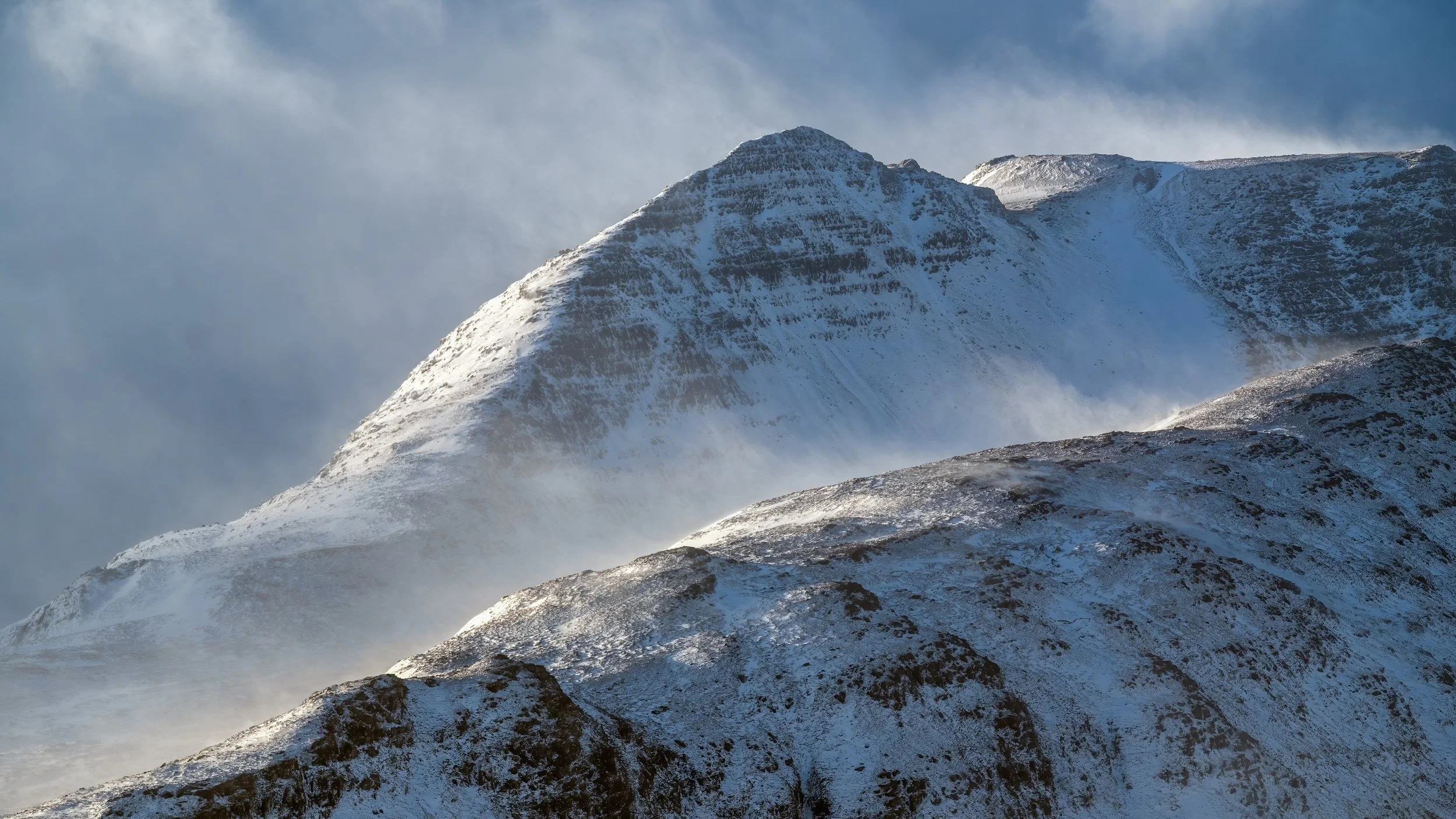
Snow being stripped from the mountain peaks by the wind. The movement was as important to the image as the mountains themselves.
Watch: Landscape Photography in Snow | Exploring Winter in Assynt
This was one of the things I enjoyed most about the trip. You weren't simply photographing a landscape covered in snow. You were watching the landscape change constantly as the weather moved through.
Sometimes You Have to Change Your Plans
Of course, not every outing produced a photograph.
There were times when the conditions were simply too brutal and I came back with nothing I really wanted to keep.
And that's part of landscape photography.
It's very easy to become frustrated when you've made the effort to get somewhere, waited for the conditions and then come away without the image you had hoped for.
But I've learned not to let that bother me too much.
If the conditions aren't working, change what you're doing.
On one particularly difficult outing, the landscape wasn't giving me anything useful, so rather than simply packing everything away, I looked for something else to photograph.
That led me to the stags.
Standing there photographing them in the middle of a snowstorm wasn't what I'd planned when I left that morning.
But sometimes the photographs you didn't set out to make are the ones you remember.
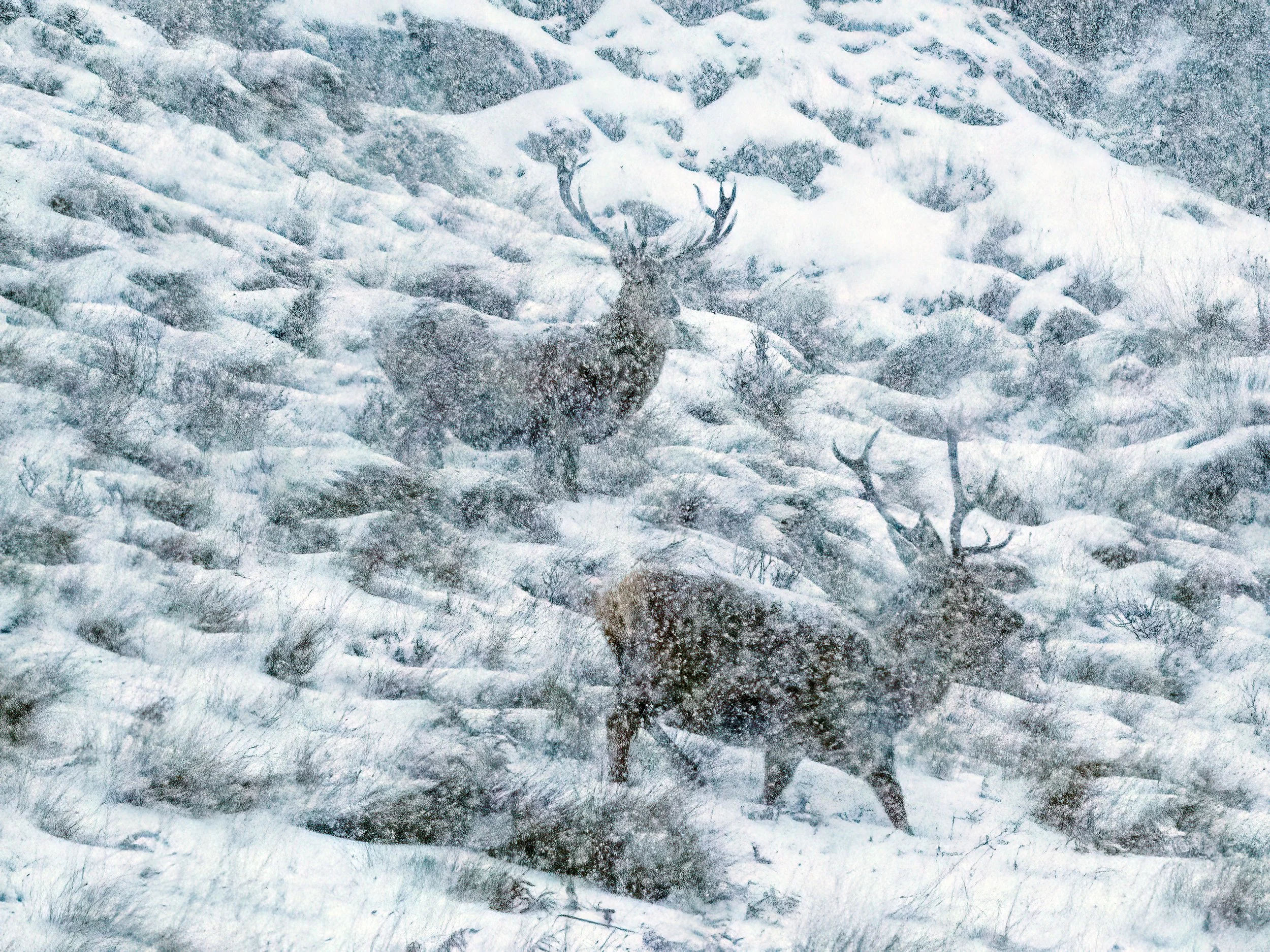
The stags gave me something completely different when the landscape conditions weren't working. Sometimes you just have to adapt.
Assynt Tested Us | Snow One Hour, Rain the Next
The weather in Assynt can change incredibly quickly, and that unpredictability became a big part of the experience.
Ardvreck Castle and a Passing Squall
One of the moments that really stayed with me came at Ardvreck Castle.
I was watching a squall moving in behind the castle, with just a subtle amount of light sitting behind it.
It wasn't dramatic in the obvious sense.
There wasn't some huge explosion of colour.
Instead, it was one of those quieter moments where everything seemed to come together for a short period of time.
The castle.
The mountains.
The incoming weather.
And that little bit of light.
Those are the moments I find myself waiting for when I'm out with a camera.
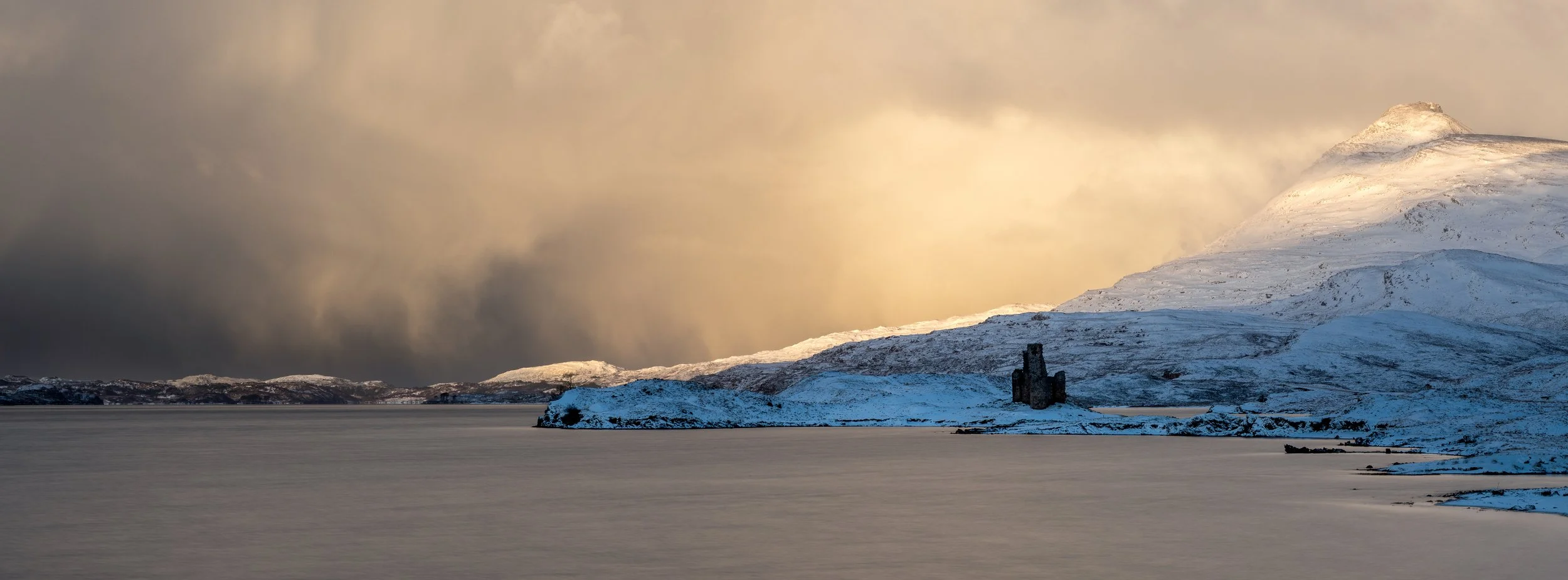
Watching a squall move in behind Ardvreck Castle with a subtle break in the light. A fleeting moment that lasted only a short time.
Don't Arrive in Assynt With the Photograph Already Planned
If I could give one piece of advice to someone heading to Assynt to photograph it, it would be this:
Don't arrive with a preconceived idea of what photograph you're going to make.
It's tempting, particularly when visiting somewhere you've seen photographs of before, to arrive looking for the same compositions.
But I think you miss something by doing that.
Let the landscape influence you.
Let the weather change your plans.
Look at what is happening rather than what you expected to happen.
I often think of it as allowing the landscape to almost put a brush in your hand.
You're still making the decisions, but you're responding to what is in front of you rather than trying to impose an image onto it.
And in a place like Assynt, that feels particularly important.
The weather can change quickly.
The light can disappear almost as quickly as it arrives.
The scene you thought you'd photograph at sunrise might look completely different an hour later.
That's not a problem.
That's the photograph.
Waiting for the Light
This trip also reinforced something I've been thinking about more and more in my own photography.
What really excites me isn't simply finding a beautiful landscape.
It's what happens to that landscape when the conditions change.
A break in the cloud can completely alter a mountain.
A passing squall can change the mood of a scene.
Snow blowing across a summit can turn a static photograph into something that feels alive.
These moments are fleeting.
And they're often impossible to reproduce.
You might be able to return to exactly the same viewpoint, but the weather will have moved on. The cloud will be different. The light will be different. The atmosphere will be different.
You get one chance.
That's what makes landscape photography so addictive.
Experiencing Assynt Rather Than Just Photographing It
There's also something else I've come away with from Assynt.
It's easy to spend an entire trip looking through a viewfinder.
Looking for compositions.
Checking exposure.
Watching the histogram.
Waiting for the light.
But sometimes you need to step away from the camera.
Look around.
Feel the wind.
Watch the weather moving across the mountains.
Actually experience the place you're standing in.
For me, the best landscape photography has always been connected to that experience.
The photograph is important, but so is the memory of standing there.
And that's probably why Assynt has stayed with me after just one visit.
I wasn't simply photographing a beautiful part of Scotland.
I was experiencing a landscape that felt wild, unpredictable and constantly changing.
And I already know I'll be going back.
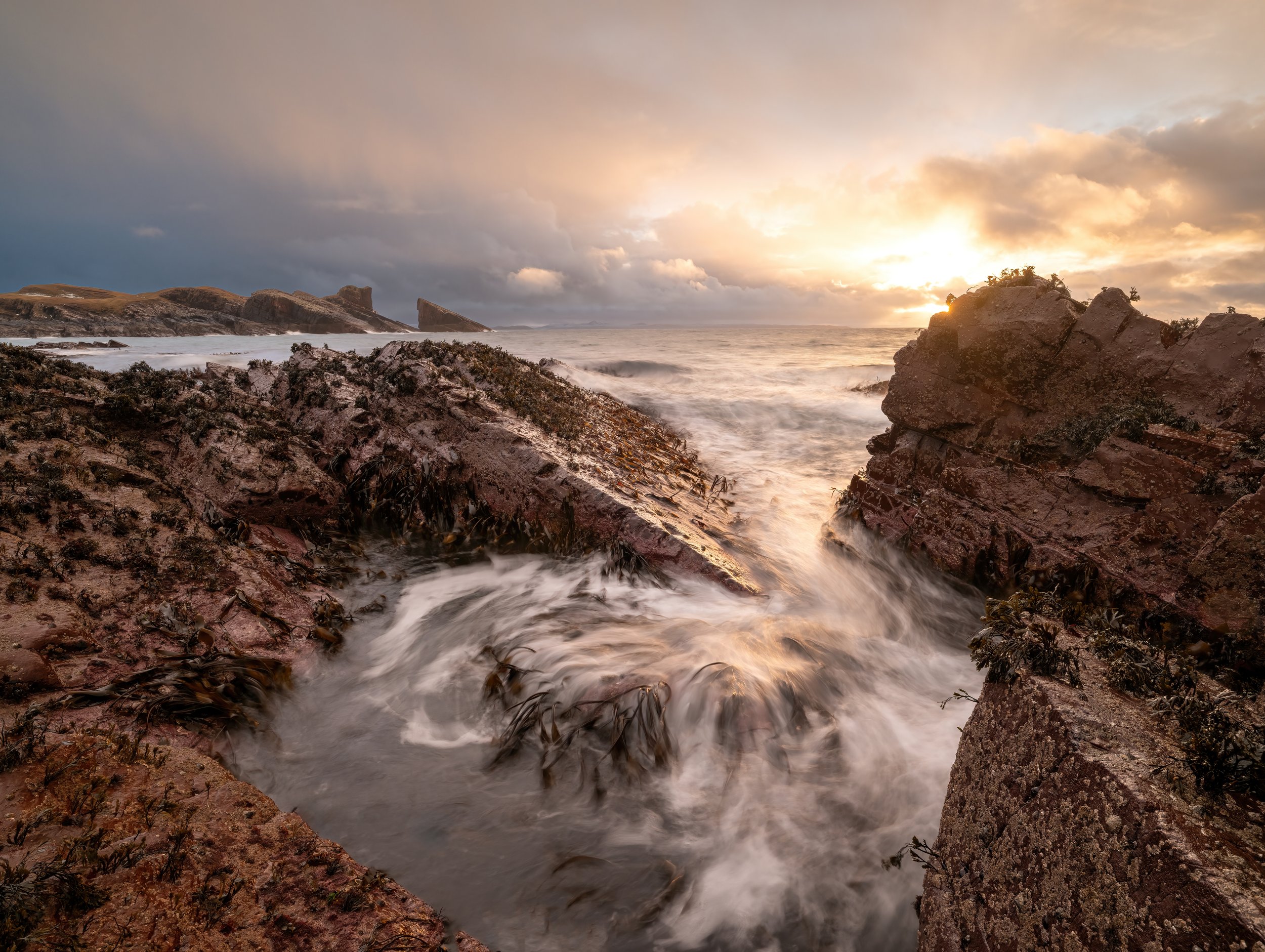
Assynt isn't only about the mountains. The coastline adds another dimension to the landscape, particularly when the weather and light begin to change.
My Assynt Photography
This trip produced a small collection of images that I'm particularly pleased with, from snow-covered mountains and blowing snow to Ardvreck Castle, coastal scenes and the unexpected encounter with the stags.
Rather than trying to capture Assynt as a collection of iconic viewpoints, these photographs are really about how the landscape felt during those few days.
The weather.
The movement.
The scale.
And most importantly, the fleeting moments of light that appeared between it all.
Watch My Assynt Photography Films
I've also documented the trip through several videos, which probably give a better sense of what it was actually like to be there than a finished photograph ever could.
Landscape Photography in Snow | Exploring Winter in Assynt, Scotland
I Captured My Best Winter Landscape Photos in Assynt, Scotland
Assynt Tested Us | Snow One Hour, Rain the Next
Landscape Photography in Assynt – Why AI Can't Recreate This Experience
That last film perhaps sums up the whole trip particularly well.
There is something about actually being there that a photograph, a video or even an AI-generated image can't quite replace.
The cold.
The wind.
The anticipation.
The disappointment when the light doesn't arrive.
And then that moment when it suddenly does.
That's the bit I'm really interested in.
Explore More Scottish Landscape Photography
Assynt is just one part of my ongoing exploration of the Scottish landscape.
I've spent time photographing other parts of the Highlands, the west coast and the islands, always looking for those same fleeting moments when weather, landscape and light come together.
Explore my Scotland photography
You can also explore my wider collection of Scottish landscape photography in the galleries.
Photography Workshops in Scotland
I also run landscape photography workshops in Scotland, including workshops across the Highlands and Outer Hebrides.
The emphasis isn't simply on visiting beautiful locations and taking photographs. I want people to understand how to respond to the landscape, work with changing conditions and make the most of whatever light we are given.
You can find my current Scotland photography workshops here:
Scotland Photography Workshops
I also offer private one-to-one landscape photography tuition for photographers who want more individual help with their photography
Assynt Landscape Photography FAQs
What makes Assynt good for landscape photography?
For me, it's the combination of scale, wilderness, dramatic mountains, coastline and constantly changing weather. The conditions can completely alter the character of the landscape, which creates opportunities for fleeting and atmospheric images.
Is Assynt good for winter landscape photography?
My first visit was in January 2026, and the winter conditions were a huge part of what made the trip so memorable. Snow transformed the landscape, while strong winds and passing snow showers created constantly changing conditions.
What weather should you expect when photographing Assynt?
The weather can change quickly. During my visit I experienced strong winds, snow, almost blizzard-like conditions and periods of much calmer weather. Rather than seeing this as a problem, I found the changing conditions were a big part of what made the photography interesting.
Do you need good weather to photograph Assynt?
Not at all.
In fact, some of my favourite conditions were when the weather was at its worst. The important thing is being prepared to adapt. If one photograph isn't working, look for another opportunity.
What is the most important thing when photographing Assynt?
Don't arrive expecting a particular photograph.
Explore. Watch the weather. Look at how the light is changing and allow the landscape to influence what you photograph.
Sometimes the best images come from moments you couldn't possibly have planned.